
The Negro Writer
27 May, 2026
Song of the week
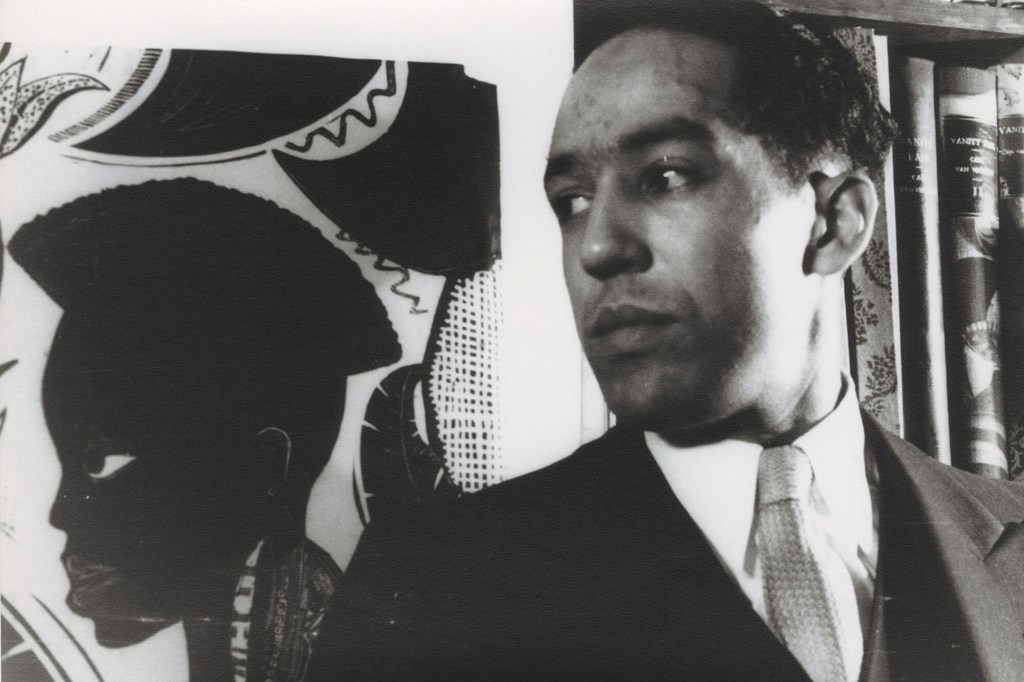
The idea of being a Black creative, or for the sake of this post, a Negro creative, never crossed my mind as a young child who liked to read and write. I saw the interest in the arts of people who looked like me simply as us being drawn to those we can relate to. Whether it be Redd Foxx or Ava Duvernay or Toni Morrison, it’s not uncommon to seek solace or be drawn to the faces that you can relate to most. Why? Because they amplify thoughts, cultures and experiences that are linked to a specific background. The separation of recognition when it comes to could partially be why an essay like The Negro Artist and the Racial Mountain by Langston Hughes was written. Although written in 1926, I find that the essence of the essay is something that we as Black people are still familiar with almost one hundred years later.
“One of the most promising of the young Negro poets said to me once, “I want to be a poet—not a Negro poet,” meaning, I believe, “I want to write like a white poet”; meaning subconsciously, “I would like to be a white poet”; meaning behind that, “I would like to be white.” ”
– Hughes in The Negro Artist and the Racial Mountain
Amongst the community, we’re still struggling with the hunger for white acceptance along with the proximity to whiteness, whether that be through spouse, offspring, career or companionship, these [redacted] struggle with their own identity and use it as a weapon against their own community.
Loving nor hating my blackness (both culture and genetics) was never something taught to me as a child. Being proud of who we are (in my family) is natural to us .Therefore it baffles me to see people that look and sound like me, with the same backgrounds as me, indifferent to themselves due to the comparisons of the men who placed themselves at the top of the pyramid.
“I want to be a white poet- not a Negro poet.” Mr. Hughes’ initial response was written: “And I was sorry for the young man-”, to which I am as well. There’s a level of self hate that’s indescribable for one to have to even consider hating oneself enough to be deemed as unworthy. What a sight to see especially in times where this mindset is still so prevalent. It’s 2025 and there are black people (and other races but this is about us right now) who are still struggling with the idea that who they are is wrong and who the white man is is right. You want to be a white (poet) because it’s more convenient. There wouldn’t be a fight for you to feel represented, for you to be paid, for you to be credited, for you to be celebrated. You want to be a negro poet because you want to exhale and to be relatable. You want the luxury of white spaces and skin yet you struggle to find the beauty in the historical struggle and overcoming of your own to fit standards and nestle your way into a system that wasn’t created with you in mind.
Now, this isn’t directed at the Negro poet that Langston Hughes had in mind, but at the people of my time who are still struggling to “accept” their blackness and/or are using their weaponized internalized racism to live a soft life. Because when you were pro black you were ignored and looked down on by the opposition, now you’ve accepted a mindset that’s unbecoming of who you naturally are and you find yourself in a space so bright it’ll block out the sun. So you settle in, ignore the micro aggressions and the frying of your hair, you rub your feet together and pray that these good white folk don’t turn at any moment and see you for who they feel you are. Because at the end of the day, you only want to be a Negro poet.
Black American. Panamanian. Bajan. Jamaican. It’ll be hard for me to write or create any work of art without thinking about who I am and using that to fuel what I wish to share with the world. My own perspective on a flower can be different due to my background alone. Who else would be able to see a rose grow from concrete?
When I first started writing poetry I was in middle school and I remember it being about depression and feeling worthless and somewhat separated in mind from my family and academic peers. I felt alone in life and I still do. I fear that I always will, but that fear drove me to write a poem about euphoria and depression. My next stage of poetic writing was in high school, around senior year. A year before I had joined a poetry club, I had written a poem about police brutality and the safety of young black men. It was a piece heavily inspired by those struggles and Beyonce’s Formation. My next phase was in college, I wrote a wide collection of poems about a childhood friend that was killed which left me in a depression where I was surely unrecognisable and possibly going through some kind of psychosis.
But it wasn’t until I started working on a book I named Suddenly Saccharine that it clicked for me that I was a black writer and not just a writer. I became enamored with Toni Morrison’s and James Baldwin’s work and it became apparent to me (for some reason…)that we can write the way that we talk, we can write about the unknown traditions and the heftiness of the culture without feeling like we have to write on a default level. Thoughts and words became limitless when I allowed myself to see that I don’t have to clean up my dialogue to be “proper” or that I don’t need to straighten my hair for important events and interviews.
It became clear to me that “by default” I was writing in a way that put a cap on my expression and pride. I was writing neutral when that was never a life that I’d lived. Knowing that feeling and growing from it, I still struggle to understand what would make a young Negro want to write like a white man?
Different things come into play with this perspective and with the Negro poet, it was his middle class background. He found himself living comfortably because of his parents working for the rich white upperclass that often placed them in close proximity where the idea that “white is right” festers and spreads to that separate group in the lower class ill-minded who believe that they could ever be seen as equal. It’s the twisted idea of believing that no matter how you’ve come to occupy those craved for spaces, you can make it further and be seen as just as important, just as pristine and just as human, precisely 5/5ths.
“We build our temples for tomorrow, strong as we know how, and we stand on top of the mountain, free within ourselves.”
This was an interesting read for me because it perfectly touched on so many topics still argued on your average Black Twitter scroll. It’s not entirely surprising that these kinds existed in years as far back as the 20’s and older, but that this essay was written in 1926, approximately 6 years after the beginning of the Harlem Renaissance. How can one live amongst so much greatness that rose through the toughest…the most inhumane of times, experience the freedom of migration to better days filled with the best art this country has ever seen…and wish to be a white poet?
Source
The Negro Artist and the Racial Mountain
https://www.poetryfoundation.org/articles/69395/the-negro-artist-and-the-racial-mountain
 TheBlogStop